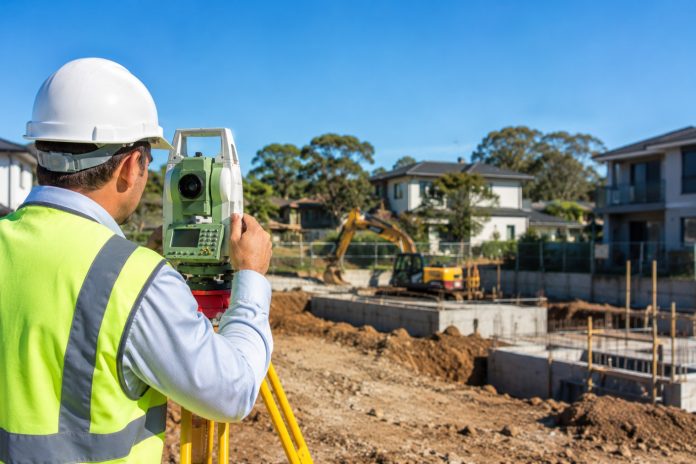
Most people never think about surveyors until they need one.
Unlike architects, builders, or developers, surveyors rarely appear in property advertisements or construction marketing campaigns. Yet industry professionals say their work is becoming increasingly important as projects become more complex and construction costs continue to rise.
Behind many successful developments lies an industry that remains largely invisible to the public but plays a critical role in preventing expensive mistakes before they occur.
At the centre of that work are contour and detail surveys.
These surveys provide accurate information about a site’s physical characteristics, including land levels, drainage patterns, existing structures, retaining walls, vegetation, access points, and surrounding infrastructure. While the information may appear technical, its impact can be significant.
Construction projects often involve hundreds of decisions before work even begins. Architects need to understand how a building will sit on the land. Engineers need accurate levels for drainage and earthworks. Builders need reliable information to estimate costs and plan construction activities.
When those decisions are based on incorrect assumptions, problems can emerge quickly.
Industry consultants point to a range of common issues that frequently arise from inadequate site information. These include drainage failures, unexpected earthworks, retaining wall redesigns, approval delays, access problems, and disputes over boundaries or neighbouring property impacts.
In many cases, the cost of fixing these issues far exceeds the cost of obtaining accurate survey information at the start of a project.
One area receiving increasing attention is stormwater management.
As rainfall events become more intense in many regions, understanding how water moves across land has become a priority for developers, councils, engineers, and property owners. Contour surveys help identify slopes, low points, and natural drainage paths, allowing project teams to design solutions before construction begins.
Without this information, drainage problems may not become apparent until heavy rain exposes weaknesses in the design.
The growing popularity of redevelopment projects is also driving demand for surveying services.
Many property owners are choosing to renovate, extend, subdivide, or rebuild rather than relocate. These projects often involve sites that contain existing structures, retaining walls, trees, services, and access constraints.
A detail survey provides a clear picture of those conditions before architects and engineers begin designing.
Technology is changing the industry as well.
Modern surveying equipment can capture site data with remarkable precision. Digital terrain models, laser scanning, GPS systems, drones, and advanced mapping software allow surveyors to provide information that can be integrated directly into design and engineering platforms.
The result is improved coordination between consultants and fewer opportunities for errors caused by outdated or incomplete information.
Survey data is also becoming more valuable outside the construction sector.
Legal professionals frequently rely on survey information when dealing with disputes involving boundaries, easements, drainage, retaining walls, and property improvements. Local governments use survey data when assessing development applications. Infrastructure projects depend on accurate site information long before construction begins.
Despite its importance, the surveying profession often remains overlooked.
Most people encounter surveyors only occasionally, perhaps when purchasing land, building a home, or resolving a property issue. Yet their work influences everything from housing developments and transport projects to commercial buildings and public infrastructure.
Construction experts say the value of accurate site information is becoming increasingly apparent as projects face greater financial pressure.
When material costs rise, approval processes become more detailed, and timelines become tighter, the margin for error shrinks. Decisions that once carried minor consequences can now have significant financial implications.
In that environment, reliable data becomes more valuable.
Surveyors cannot eliminate every project risk. Unexpected challenges can still emerge during planning and construction. What accurate survey information can do, however, is reduce uncertainty and allow project teams to make better-informed decisions.
For property owners, the lesson is straightforward.
The most expensive construction mistakes are often the ones discovered too late. By identifying potential issues before plans are finalised and budgets are committed, surveyors help create a more reliable foundation for every stage that follows.
The public may rarely notice their work, but industry professionals increasingly recognise its importance.
As development becomes more complex and the cost of mistakes continues to rise, the hidden industry helping prevent those mistakes is stepping into a more prominent role.
Long before the first machine arrives on site, surveyors are already helping shape the success of the project.